Introduction
We built these quartz heating lamps for one reason: curing carbon fiber composites. This isn’t “heat for heat’s sake.” It’s focused, high-intensity heat—built to make resin cross-link quickly and cleanly, on the line, where every minute and every repeatable cycle counts.
The Power, Voltage, and Size—Plain Talk
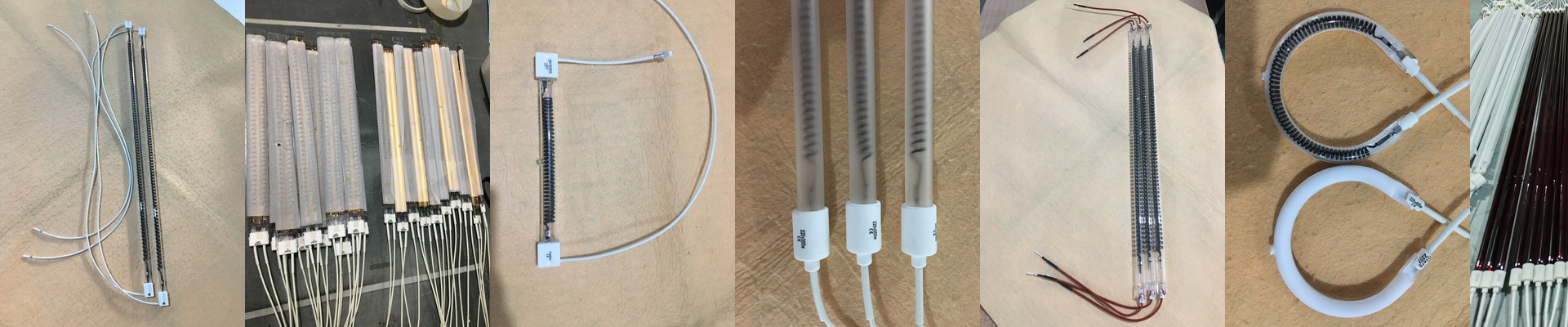
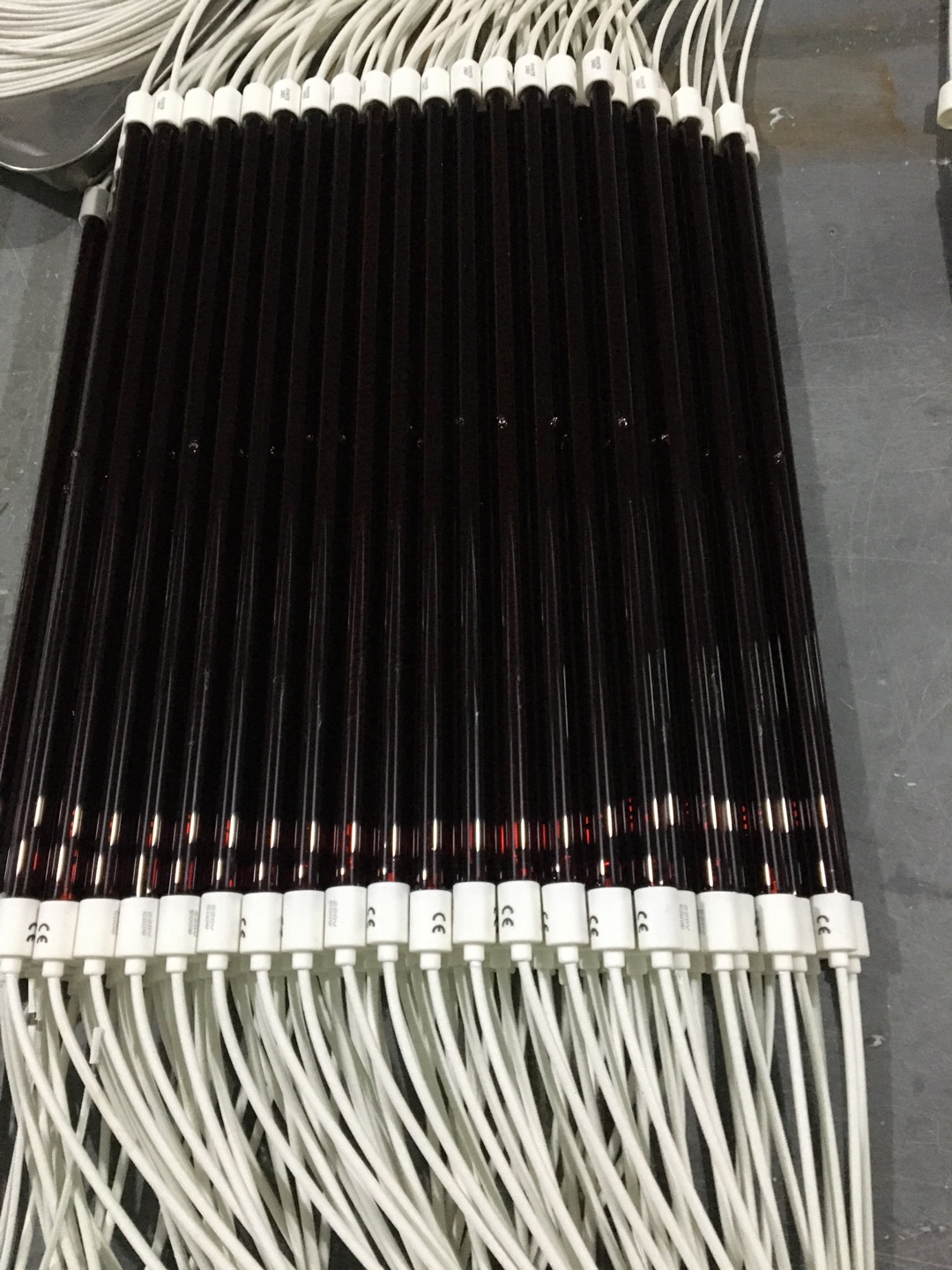
Carbon fiber curing needs a lot of heat, fast. So our lamps are spec’d to deliver exactly that. A typical unit runs at 400V and pulls 2500W from a 300mm tube. That power density gives you a quick ramp-up, so you hit the resin gel window sooner and shorten the whole cure cycle. The 300mm length isn’t random. It lines up with common pre-preg layup widths and tooling zones, so you get a clean heating footprint—right where you need it—without overshooting the part. You get tight control over the hot zone, and that makes machine layout easier. Just keep in mind: a 400V, 2500W tube puts out serious heat, so your cooling and thermal management need to be properly set up from the start.
What’s Inside—and Why It Matters
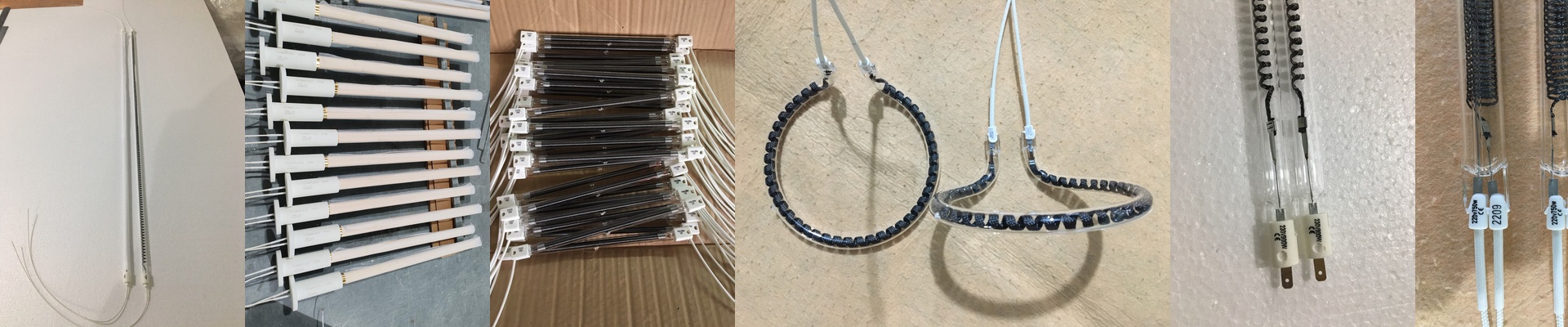
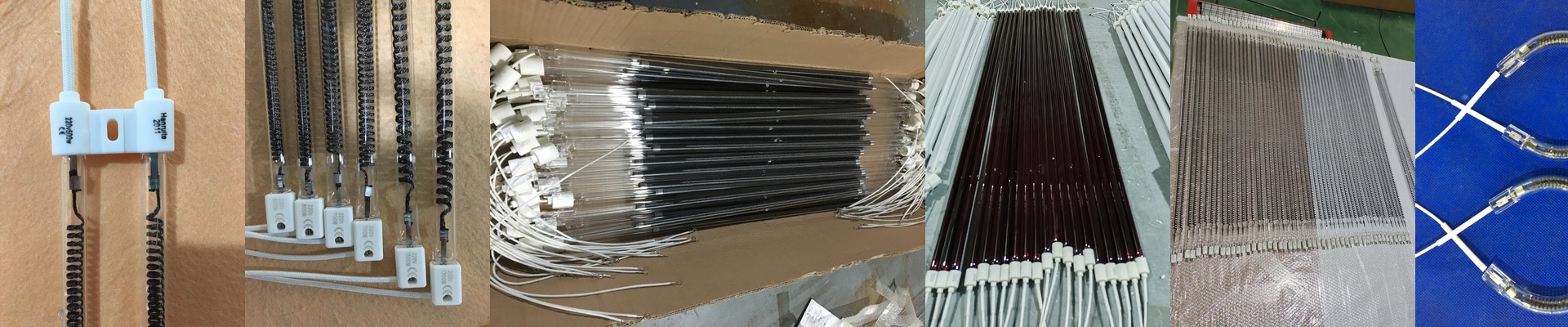
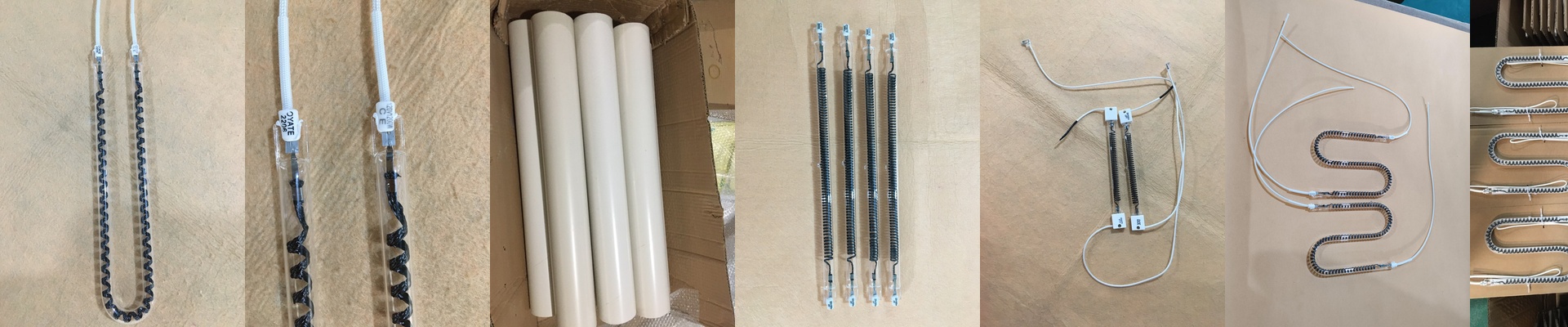
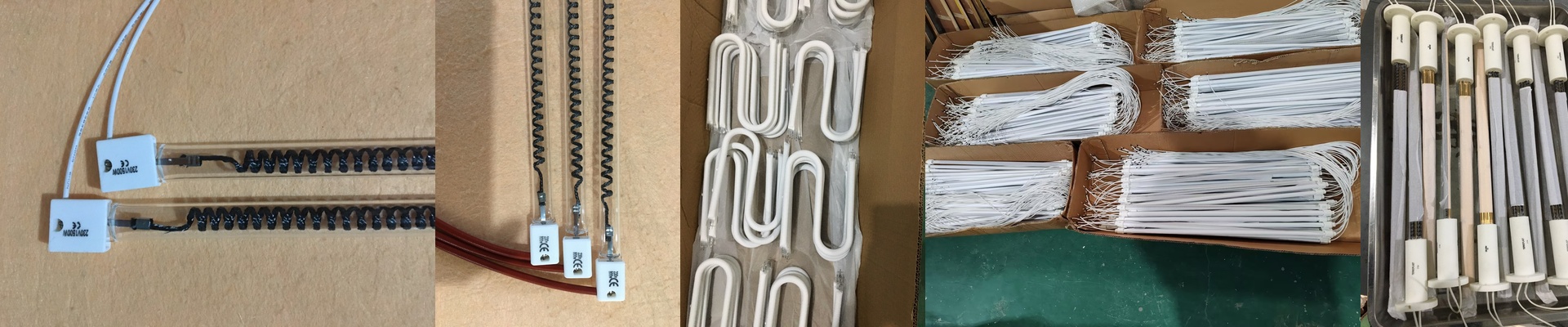
At the heart is a shortwave halogen element, sealed inside a quartz envelope. Quartz handles the thermal shock of rapid on/off cycling and stays stable at the temperatures epoxy and other high-performance resins demand. The halogen fill gas helps keep the filament stable, so output stays consistent over long stretches of service. We also add a reflective coating on the quartz. It pushes energy forward, so more of it lands on the part—less wasted heat sideways. And the R7s connector? Practical choice. It gives solid contact, supports the lamp mechanically, and makes installation a straightforward drop-in in standard curing fixtures.
How It Performs—Where It Counts
In carbon fiber curing, you want heat that’s controllable and even, without scorching the surface. Quartz halogen lamps deliver intense radiant energy that penetrates the layup quickly, which can cut soak time and boost throughput. The tube design is compact, so it fits into tight spots in the tooling. Space is never easy in these setups, and this lamp was built to work where space is tight. We design these lamps for the real world—automated presses and ovens where reliability shows up as uptime. You get consistent output, repeatable cycles, and a lamp that takes the heat without drifting. Set up adequate cooling and keep alignment right, and the system will hold the process window you need for quality composite parts.